Tara O’Doherty is a neurodivergent pet lover who creates digital experiences and products for some of the world’s largest brands.
Knight Tara brings together her love for her fur family—including those she has lost—and a lifetime of lucid dreaming. In her own dreams, Tara has used creativity and lucid-dreaming skills to overcome nightmares and anxiety. These stories turn that personal experience into adventures about courage, friendship, and imagination.
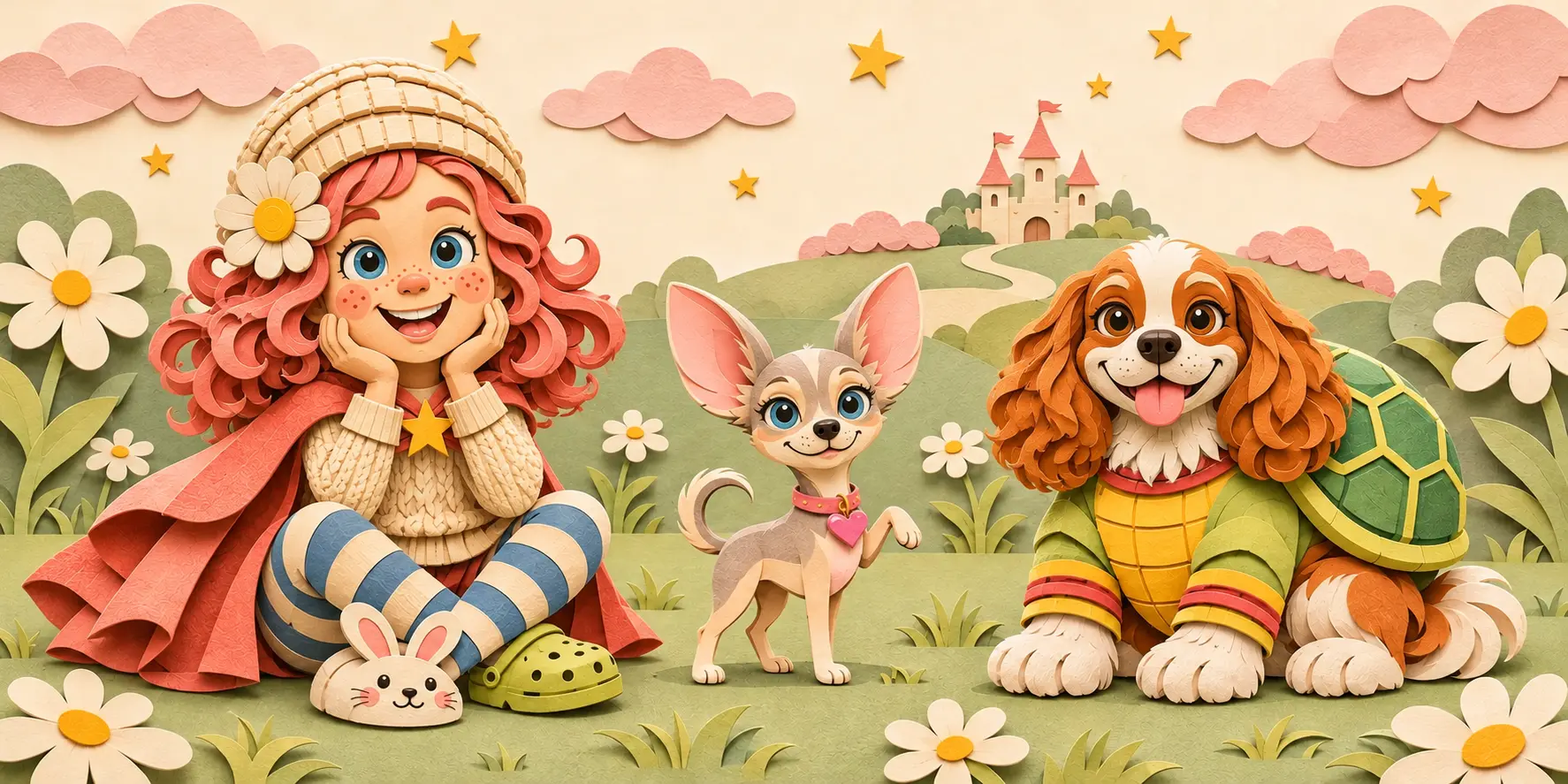
The Adventures of Knight Tara is a children’s picture-book series by Tara O’Doherty, following a fictional young knight and her animal friends. The paperbacks are for shared reading with children aged 4–7. The companion Tiny Adventures range offers personalised colouring-book PDFs for ages 3–8 and 9–99+, featuring children’s names and their pets or favourite story characters. Tiny Adventures custom colouring books are coming soon. The first paperback is planned for Amazon in December 2026. Inspired by her lifelong experience of lucid dreaming and her much-loved dogs, the stories blend real-life experiences, research-informed thinking, and imagination. In the dream world of Dreamsville, Tara, Amy, and Emma-Loo-Hoo explore bravery, friendship, and trying again—with special guest Mr. Connors.
You’re welcome to use this description with credit and a link to knighttara.com.
Please confirm image permissions and the appropriate credit before publication. Keep logos and artwork intact; contact us for alternate formats.
Ask Tara why these dogs needed their own books.
Real pets, tiny jokes, and stories to read and make together. Tara can discuss how she uses AI to help build the website, develop visual concepts, and support business workflows, while keeping the characters, humour, and editorial direction her own.
The Technology (AI)
The tools help. Tara decides what belongs.
Explore how Tara uses AI to develop the website, visual concepts, and business workflows, with her characters, humour, and creative direction guiding the work. Tiny Adventures custom colouring books are coming soon.
Research checked . Explore more interview ideas from this collection. Sources and research context are included with each brief.
AI & the founder
The storyteller using AI to build the business behind the books.
Why now. The Canadian AI adoption conversation can be told through the work of an independent creator.
Tara uses AI to develop and iterate the website, visual concepts, and business workflows around Knight Tara. She sets the characters, humour, and creative direction. Tiny Adventures custom colouring books are coming soon at $12.99 CAD per adventurer. The Monthly Book Club and Special Editions are also coming soon.
Evidence & interview brief
A question worth asking
What do you change when an AI output looks polished but misses the character?
What we can discuss or show
A behind-the-scenes demonstration with fictional inputs, showing the draft and the author’s revisions.
The human decision in an AI-assisted children’s product.
Why now. Recent child-centred AI design work keeps human judgement in focus.
Ask Tara about directing the creative system, reviewing examples and designing parent approval of a pet illustration before a future purchase. Tiny Adventures custom colouring books are coming soon.
Evidence & interview brief
A question worth asking
What would make you reject an illustration even if a model says it is finished?
What we can discuss or show
Sample pet illustrations and the creative choices behind the characters.
An independent creator building a world, not just generating a book.
Why now. AI makes production a timely topic; editorial consistency is the more interesting test.
Explore how Tara carries a cast, humour, and visual direction across picture books, colouring samples, and the website. AI helps Tara explore ideas; her lived experience, characters, and editorial choices shape the books.
Evidence & interview brief
A question worth asking
How do you recognise when a technically good output does not belong in Knight Tara?
What we can discuss or show
A character-to-page-to-website walkthrough, including examples that needed human correction.
Knight Tara began with Tara’s experience of frightening dreams and her love for her pets. The books give those experiences a fictional home: Dreamsville. They are stories to share, laugh about, and question together. Their effects on children’s nightmares have not been clinically tested.
Research checked . Explore more interview ideas from this collection. Sources and research context are included with each brief.
Evidence & experience
Where does real life end and Dreamsville begin?
Why now. The debate about children’s technology and wellbeing rewards clear distinctions between experience and evidence.
Explore how Tara separates everyday life from the made-up world of Dreamsville. Tara can discuss how her own lucid-dreaming experience shaped stories about awareness, courage, and agency. The books are entertainment and have not been clinically tested as a nightmare intervention.
Evidence & interview brief
A question worth asking
How do you show a young reader which parts of a story belong to a dream?
What we can discuss or show
An author-led walkthrough showing where the story distinguishes dreaming from waking life and invites imaginative choices within Dreamsville.
One more story is a relationship, not a performance target.
Why now. 2026 shared-reading research provides context for the familiar bedtime ritual.
Ask Tara what makes a story worth reading again: a recognisable character, a question worth asking, and a joke the grown-up enjoys too. Shared-reading research adds context; it is not evidence that Knight Tara books reduce nightmares.
Evidence & interview brief
A question worth asking
What makes a picture book enjoyable for the grown-up reading it again?
What we can discuss or show
An author interview about The Adventures of Knight Tara in Big Dog Troubles.
Shared reading frequency was associated with developmental measures in a Japanese birth cohort.
36,866 mother–child pairs, with reading assessed up to age 3. Association is not causation; a younger population than Knight Tara’s picture-book audience.
Their pet belongs in the story. What does personalisation really add?
Why now. Research on involvement with personalised books offers a more useful discussion than one-size-fits-all promises.
Ask how a pet’s quirks and a child’s name can inform a funny creative product. Knight Tara’s samples make that idea tangible; an independent researcher can explain what the evidence does and does not establish.
Evidence & interview brief
A question worth asking
How do you keep the story funny when the details change?
What we can discuss or show
A sample-to-sample comparison using fictional children and different animal characters.
Research informs our thinking; the books have not been clinically validated as a sleep intervention. These are stories for entertainment, built upon real-life experiences. We are not psychologists or pediatricians. For concerns about a child’s sleep or wellbeing, seek advice from a qualified healthcare professional.
The Social-Good Enterprise
Stories with a personal reason for being.
Knight Tara began with Tara’s experience of frightening dreams and her love for her pets. The books give those experiences a fictional home: Dreamsville. They are stories to share, laugh about, and question together. Their effects on children’s nightmares have not been clinically tested.
Research checked . Explore more interview ideas from this collection. Sources and research context are included with each brief.
Evidence & experience
Where does real life end and Dreamsville begin?
Why now. The debate about children’s technology and wellbeing rewards clear distinctions between experience and evidence.
Explore how Tara separates everyday life from the made-up world of Dreamsville. Tara can discuss how her own lucid-dreaming experience shaped stories about awareness, courage, and agency. The books are entertainment and have not been clinically tested as a nightmare intervention.
Evidence & interview brief
A question worth asking
How do you show a young reader which parts of a story belong to a dream?
What we can discuss or show
An author-led walkthrough showing where the story distinguishes dreaming from waking life and invites imaginative choices within Dreamsville.
Research in context
Evidence briefing · 2026-08-20
The briefing emphasizes the context and purpose of children’s technology use.
Ages 0–18; much of the screen-use evidence is observational. No claim that Knight Tara treats sleep or anxiety.
Evidence & experience
One more story is a relationship, not a performance target.
Why now. 2026 shared-reading research provides context for the familiar bedtime ritual.
Ask Tara what makes a story worth reading again: a recognisable character, a question worth asking, and a joke the grown-up enjoys too. Shared-reading research adds context; it is not evidence that Knight Tara books reduce nightmares.
Evidence & interview brief
A question worth asking
What makes a picture book enjoyable for the grown-up reading it again?
What we can discuss or show
An author interview about The Adventures of Knight Tara in Big Dog Troubles.
Research in context
Peer-reviewed observational study · 2026-01-08
Shared reading frequency was associated with developmental measures in a Japanese birth cohort.
36,866 mother–child pairs, with reading assessed up to age 3. Association is not causation; a younger population than Knight Tara’s picture-book audience.
Evidence & experience
Their pet belongs in the story. What does personalisation really add?
Why now. Research on involvement with personalised books offers a more useful discussion than one-size-fits-all promises.
Ask how a pet’s quirks and a child’s name can inform a funny creative product. Knight Tara’s samples make that idea tangible; an independent researcher can explain what the evidence does and does not establish.
Evidence & interview brief
A question worth asking
How do you keep the story funny when the details change?
What we can discuss or show
A sample-to-sample comparison using fictional children and different animal characters.
Research in context
Peer-reviewed study · 2025-11-22
A study of 80 kindergarten children examined involvement with personalised books.
Specific books, children, and shared-reading conditions. It did not test pets, colouring PDFs, or Knight Tara; effects cannot simply be transferred.
Three starting points for an interview.